
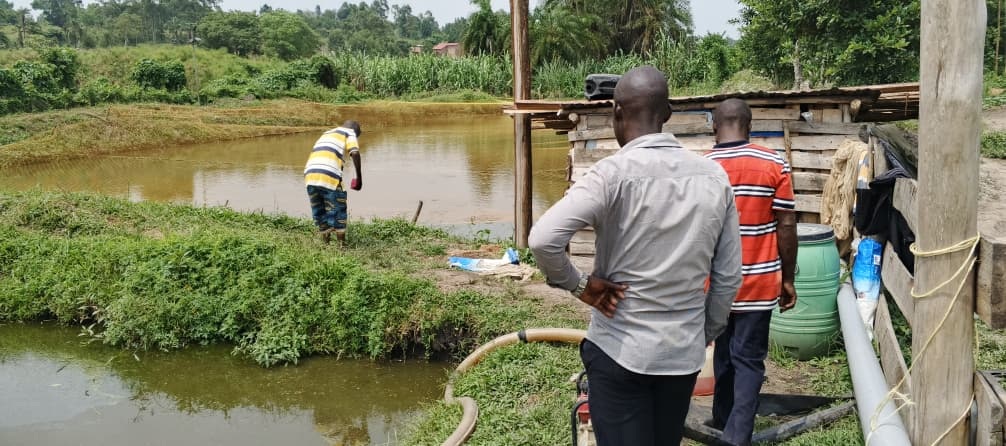
Abagambakamu Fish Farmers Association provides comprehensive training programs designed to equip farmers with both theoretical knowledge and practical skills required for successful fish farming. Our training is delivered by experienced aquaculture specialists and is tailored to suit beginners, existing farmers, youth groups, and commercial investors.
Site Selection and Pond Planning
Successful fish farming begins with selecting the right location. During this training, farmers are guided on how to identify suitable land for fish ponds based on soil type, water availability, and environmental factors. Farmers learn how to design ponds that maximize productivity while minimizing costs and risks. Proper site selection helps prevent water leakage, poor fish growth, and pond management challenges.
Pond Preparation and Water Management
Farmers are trained on how to prepare fish ponds before stocking. This includes clearing vegetation, controlling predators, improving pond soil quality, and ensuring proper water retention. Farmers also learn effective water management techniques such as maintaining correct water levels, monitoring water quality, and ensuring adequate oxygen levels necessary for fish survival and growth.
Fish Feeding and Nutrition Management
Feeding is one of the most critical aspects of fish farming. Farmers are trained on selecting appropriate fish feeds, feeding schedules, and feeding quantities. The training also includes guidance on producing locally available feeds to reduce operational costs. Proper feeding improves fish growth rates, reduces mortality, and increases profitability.
Fish Health and Disease Control
Fish diseases can cause major losses if not properly managed. Farmers are trained to identify common fish diseases, understand their causes, and apply preventive measures. The training emphasizes maintaining clean water, proper feeding practices, and early disease detection. Farmers are also guided on how to seek professional help when disease outbreaks occur.
Harvesting and Post-Harvest Handling
Proper harvesting techniques ensure fish are harvested at the right size and quality. Farmers learn the best harvesting methods that minimize fish stress and physical damage. Training also covers proper fish handling, storage, and transportation to maintain freshness and market value.
Fish Farming Business Management
Fish farming is a business venture, and farmers are trained to treat it as such. This training covers cost management, record keeping, production planning, and marketing strategies. Farmers learn how to track expenses, calculate profits, and make informed business decisions that improve productivity and sustainability.
Sustainable Aquaculture Practices
The association promotes environmentally friendly fish farming practices. Farmers are trained on responsible water use, waste management, and ecosystem conservation. Sustainable practices help protect natural resources and ensure long-term fish farming success.